Key Takeaways
- Open layout: Open concept kitchens remove most walls between the kitchen, dining table, and living room, creating an airy feel, better natural light, and stronger social connection.
- Key benefits: The biggest benefits are visual space, open flow, and flexible kitchen design; the main drawbacks are cooking smells, noise, lack of privacy, and clutter in plain sight.
- Hybrid Solutions: Hybrid solutions like glass partitions, sliding doors, half walls, and wet/dry kitchen zones can balance an open concept with the control of a closed kitchen.
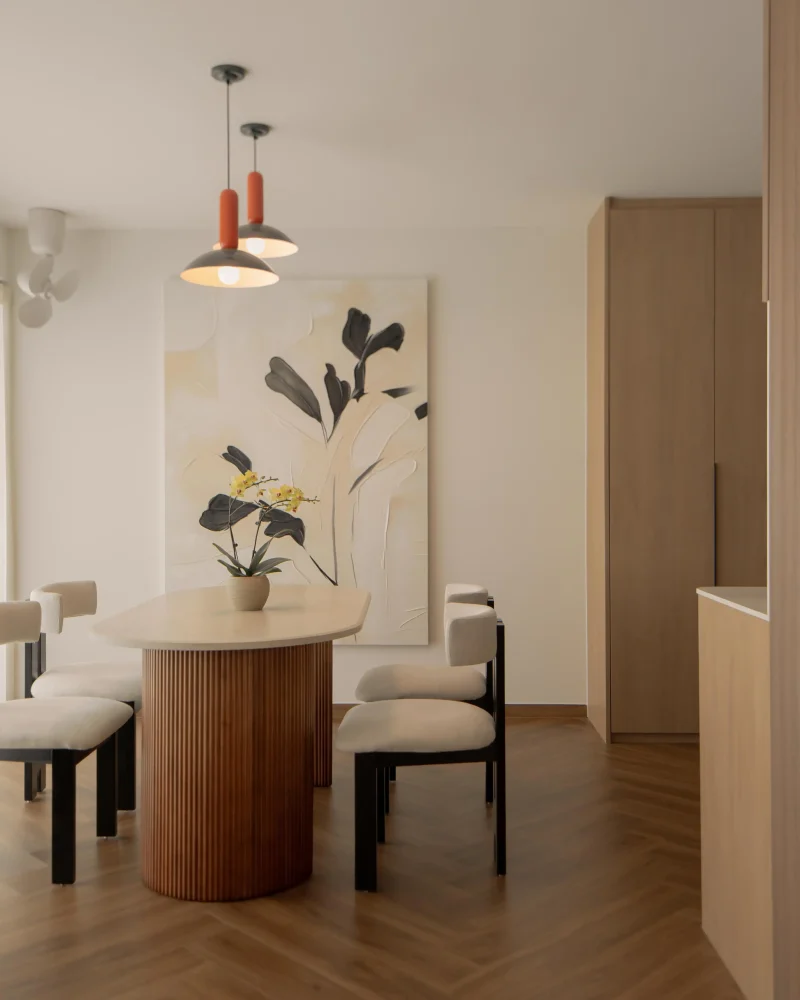
Open concept kitchens became a hallmark of modern homes from around 2010 onward, especially in compact apartments, condos, and smaller houses where every square metre matters. Open-concept kitchen designs have become increasingly popular as they create a sense of openness, making the entire space feel larger and more connected, which is particularly beneficial in smaller homes.
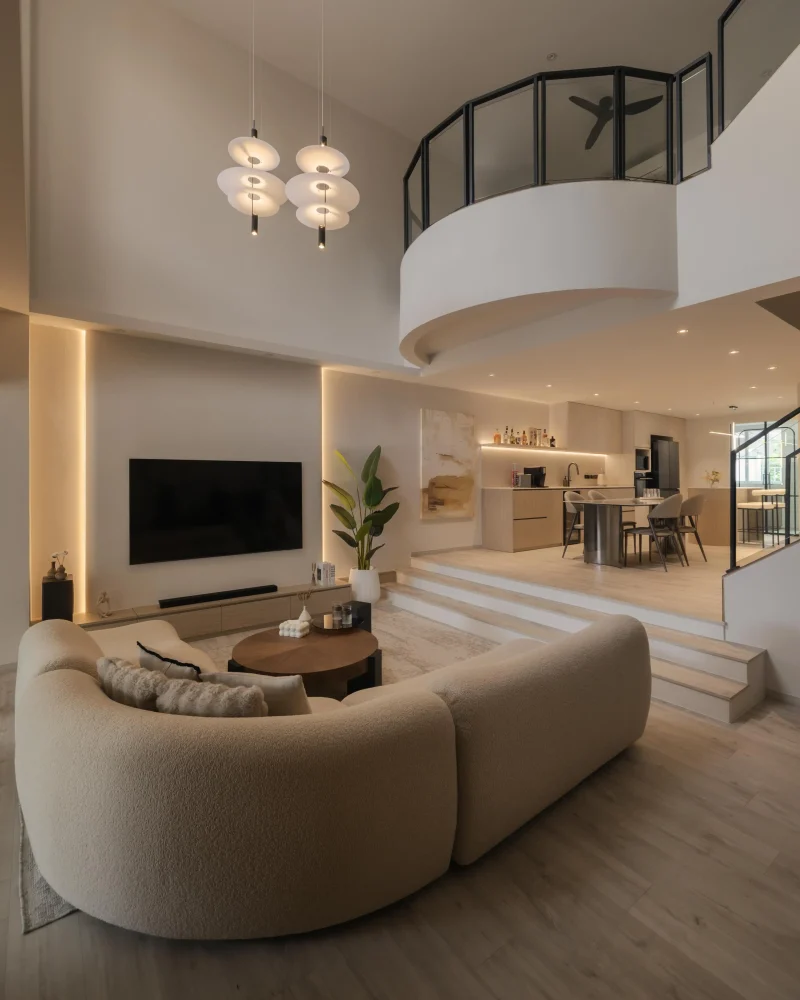
In simple terms, an open concept means the wall between the kitchen and living room, kitchen and dining room, or dining room is removed or reduced. The result is usually shared flooring, shared ceiling lights, and one open floor plan where cooking, dining, and relaxing happen in one connected open concept space.
This modern layout turns the kitchen into the vibrant heart of the home. You can cook while chatting with people at the dining table, keep an eye on kids in the living area, and move easily between the dining and living areas. This guide covers the pros and cons, design ideas, zoning, materials, maintenance, and FAQs so you can decide whether an open concept kitchen is right for your house.
Is an Open Concept Kitchen Right for You?
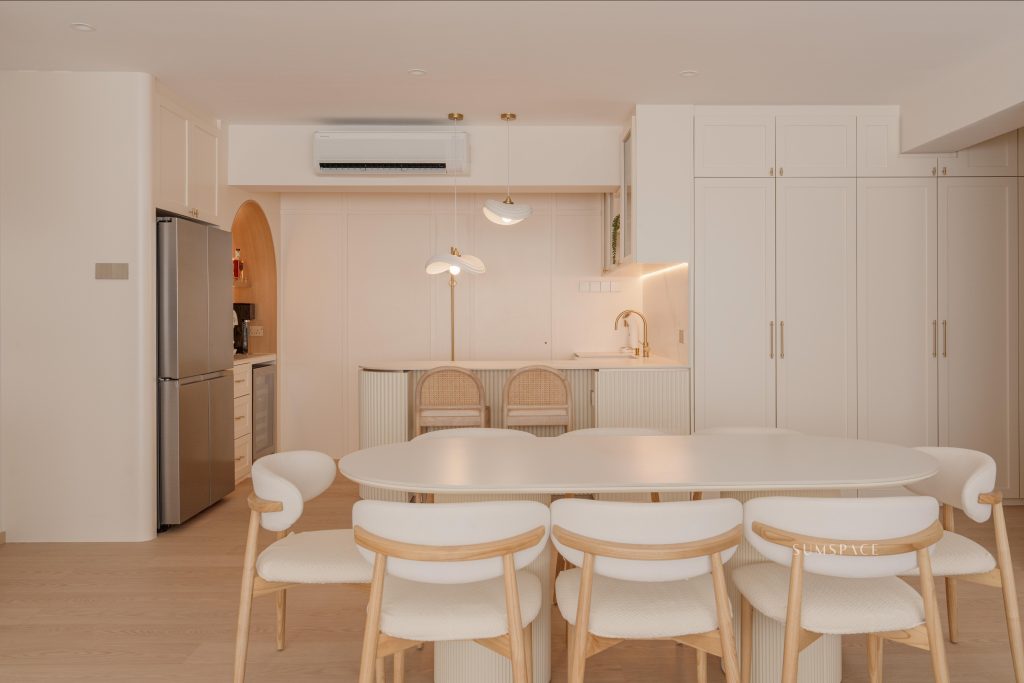
Before you commit to an open concept kitchen design, answer the “yay or nay?” question honestly. Open concept kitchens work by reducing walls, sharing living space with dining and lounging, and often anchoring the entire area with a kitchen island.
Ask yourself:
- Do you cook lightly, or do you often do deep frying, stir frying, and spice-heavy cooking?
- Can you tolerate cooking odors, hood noise, and kitchen equipment being easily visible?
- Do you want privacy, or do you prefer entertaining guests while cooking?
- Will you keep counters tidy, or will messy stuff collect on the island?
A family with young kids may love an open layout because homework can happen at the breakfast nook or dining table while an adult cooks nearby. An avid cook who wants to hide dishes, smoke, and splatter may prefer a traditional layout or closed kitchen.
Designing a modern open-concept kitchen requires balancing seamless aesthetics with high functionality. You also need a strong kitchen layout: optimize your cooking workflow by placing the sink, stove, and refrigerator to form an efficient, easy-to-navigate triangle.
Choose open concept if you want connection, natural light, group cooking, and a spacious feel. Stay closed if you value privacy, cook intensely, or dislike regular upkeep. Choose hybrid if you want openness most days but need a separate zone for serious cooking.
Pros and Cons of Open Concept Kitchens
Weigh the pros and cons before removing any walls. Structural work can be expensive, and returning to a closed kitchen later is rarely simple. According to Houzz research reported by KBB, 43% of renovating homeowners are making kitchens more open to interiors.
The pros are clear: improved natural light, more visual space, an airy feel, better sightlines for supervising children, and easier conversation with family and guests. Removing walls eliminates bottlenecks, allowing for smoother, unobstructed movement between cooking, dining, and relaxing zones. Open-concept kitchens create a seamless flow between cooking, dining, and living areas, which can improve traffic flow and make it easier for families to interact during gatherings.
The open layout can enhance social interaction, allowing cooks to engage with family and guests while preparing meals, fostering a more communal atmosphere. Open-concept kitchens enhance social interaction by allowing family members and guests to engage with the cook while meals are being prepared, fostering a more communal atmosphere. The layout of an open-concept kitchen encourages group cooking, enabling multiple people to work together comfortably in the same space, which can enhance family dynamics during meal preparation.
A kitchen island can double as prep space, breakfast bar, informal dining table, and casual seating. An oversized island acts as a natural divider, provides extra counter prep, and doubles as casual dining space when paired with bar stools. The open space is highly versatile, easily adapting to various needs.
The cons are practical. Cooking smells can easily travel throughout an open-concept kitchen, making it difficult to contain odors, especially when preparing strong-smelling dishes. Grease and cooking smells drift into sofas, curtains, and adjoining areas. Hood fans, blenders, and clattering pans can interrupt TV or conversation. One of the main disadvantages of open-concept kitchens is the lack of privacy, as cooking activities are fully visible from the living and dining areas. Open-concept kitchens can be harder to keep clean, as any mess or clutter is immediately visible from the adjoining living spaces, requiring regular upkeep.
Resale still favors concept kitchens in many markets, but defined rooms are returning in some interior design discussions. Flexibility is now a plus.
Open Concept Kitchen Design Ideas
The best open kitchen design depends on your space, habits, and design style. Here are six kitchen designs that show different levels of openness, from minimal to warm, compact, and industrial.
Minimal White Island Kitchen for Modern Apartments
This open concept kitchen idea suits 2024–2025 condo developments: a single-wall open kitchen with off-white or white cabinets, integrated fridge, slim quartz island, and minimal hardware. The island runs parallel to the kitchen space and replaces a separate dining room by seating four on the living-room side.
Recessed lights, a mirror panel, and balcony windows bounce natural light through the living space. Stick to a single neutral base color throughout the space, layering in accents and textures to connect the kitchen to your living room decor.
Warm Wood and Black Accents Open Kitchen
Picture a l shaped kitchen with oak veneer cabinets, black countertops, open shelves, and a matching wood island between the kitchen and living room. Wooden elements on the floor, shelves, media console, and island create visual continuity.
Black pendants, black-framed art, and slim track lighting tie into the oven and cooktop. Earthy tones or muted shades can create a warm and inviting atmosphere, contributing to the overall aesthetic of the home. This is a timeless design for homeowners who want warmth without losing modern design clarity.
Family-Friendly Kitchen with Dining Table Extension
A T-shaped arrangement attaches a rectangular dining table to the short end of the island. Kids can do homework while an adult cooks, and sightlines remain open across the open concept layout.
Use a stone island and solid wood table to create zones without breaking cohesion. Durable chairs, wipeable paint, and a low-pile rug define the dining area. Creating distinct zones in an open-concept kitchen helps define different areas, such as using a kitchen island as a focal point and a coffee table in the living room.
Compact Single-Wall Kitchen in a Studio Apartment
In 35–45 m² small spaces, the entire kitchen can live on one wall opposite a sofa and TV. A movable island or bar cart adds counter space, storage space, and two-person dining when needed.
Use top cabinets only where useful. Maximize your wall space with top-hung cabinets to keep your countertops clear and open. Quiet appliances and a low-profile hood are essential because sound and cooking odors travel quickly in an open plan kitchen.
Soft Industrial Loft Kitchen
A soft industrial open plan layout may include exposed brick, concrete-effect flooring, a metal-framed island, walnut stools, linen curtains, and warm pendants. A dropped ceiling or exposed beams above the kitchen help distinguish cooking from lounging.
The use of materials like marble for countertops and backsplashes in open-concept kitchens adds a classy and luxurious touch to the space, enhancing its aesthetic appeal. This style works best in modern homes with high ceilings and enough open space to handle stronger materials.
Scandinavian-Inspired Airy Kitchen-Living Space
This open concept kitchen uses white walls, pale oak floors, sage or muted blue lower cabinets, and a simple dining table between kitchen and living room. Slim chairs preserve sightlines and visual space.
Large windows, minimal treatments, and plants amplify the airy feel. It is great inspiration for anyone who wants a calm, well designed kitchen with easy maintenance.
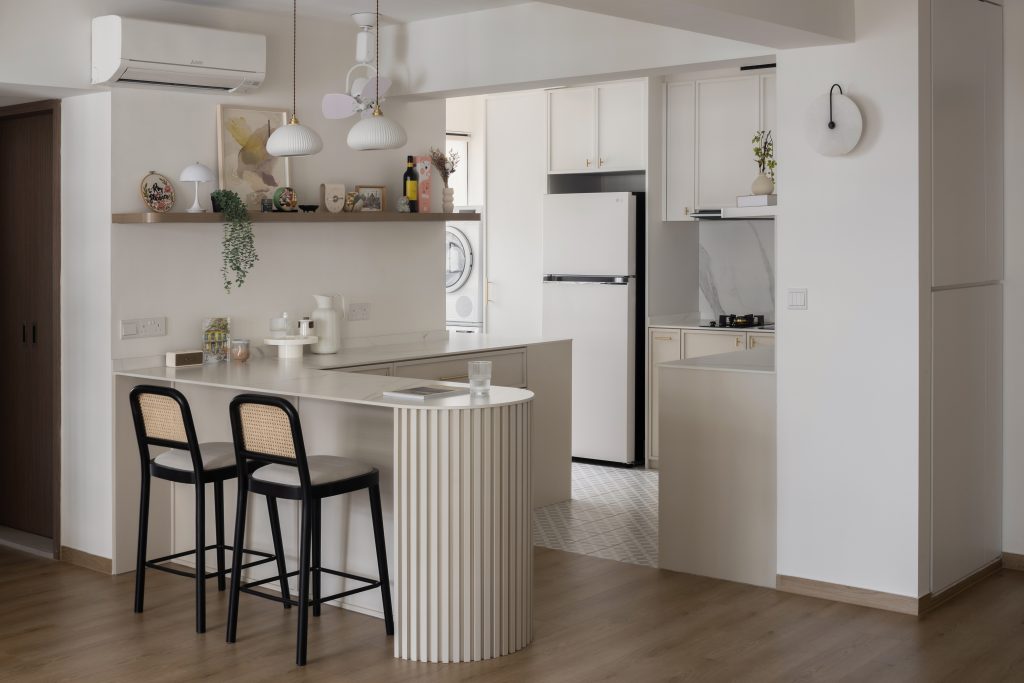
How to Create Zones in an Open Concept Kitchen
To create zones is the secret to keeping an open plan organised rather than chaotic. Most open concept layouts need cooking or wet zones, dry prep and storage solutions, and dining/living zones.
Separating wet and dry areas in an open-concept kitchen enhances functionality, with the wet area including the sink and stove, and the dry area reserved for preparation and storage. Different zones within the open space are defined using area rugs, distinct flooring materials, or strategic furniture placement.
Using Kitchen Islands and Peninsulas as Room Dividers
An island or peninsula acts like a low wall between kitchen and living. The kitchen side can hold a sink, hob, dishwasher, drawers, and kitchen essentials, while the living side can offer stools, display niches, or bookshelves.
Leave at least 90–110 cm of walkway around it where possible. A raised counter edge can hide plates and pans from direct view.
Flooring, Ceilings, and Colour to Define Zones
Use large rugs or distinct lighting fixtures to subtly define where the kitchen ends and the living space begins. Combine ambient ceiling lights, task lighting, and decorative accent lighting to create depth and mood.
Use the same flooring material across both the kitchen and living areas to unify the zones. Or use durable tile in the kitchen and timber in dining, with a neat transition. Cabinetry, countertops, and flooring are usually designed to coordinate harmoniously with the adjacent living and dining room decor.
Partial Partitions, Glass Screens, and Sliding Doors
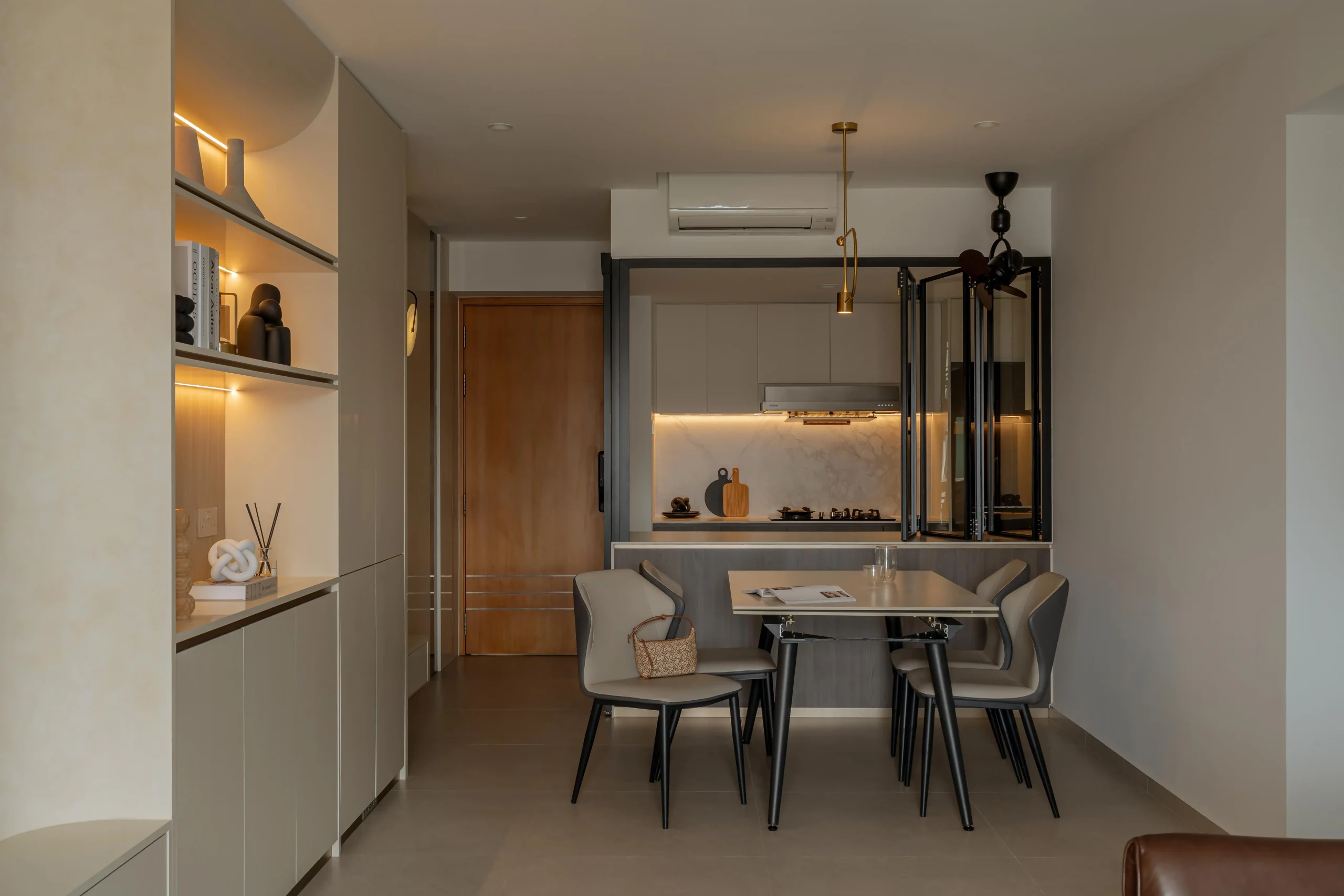
Glass partitions, glass separators, or screens can help manage cooking smells and provide privacy in an open-concept kitchen while maintaining an airy feel. Sliding doors between the kitchen and dining table can stay open for parties and close during heavy cooking.
Half walls and open shelving also create distinct zones without blocking light. In a four-room flat, a 1.2 m half wall behind a sofa can back onto a peninsula, keeping the room connected but not visually loose.
Managing Cooking Smells, Noise, and Clutter
Cooking smells, smoke, sound, and clutter are the main reasons people hesitate about open concept kitchens. The solution is technical planning plus honest self-assessment about how often you cook heavily.
Ventilation and Odor Control
Install a strong range hood system along with an air purifier to help eliminate cooking odors in an open-concept kitchen. Range hoods should be sized to the cooktop and vented outside where possible.
Regularly opening windows can help dissipate cooking smells and improve ventilation in an open kitchen. Switch the hood on before cooking, keep lids on oily dishes, and run the fan after meals. Simmering peels from citrus fruits can serve as a natural method to reduce kitchen odors after cooking. For very heavy cooking, consider a wet kitchen plus open dry kitchen.
Noise Management in Open Concept Kitchens
Open layouts carry dishwasher, blender, exhaust, and pot noise farther. Choose quieter appliances, place the loudest kitchen equipment away from the TV wall, and use rugs, curtains, upholstered furniture, or acoustic panels to absorb sound.
A low cabinet or bookcase between the TV area and main cooking zone can reduce direct noise paths without damaging the open flow.
Keeping Clutter Under Control
In an open concept kitchen, clutter on countertops, the island, or the dining table affects the whole home. Prioritize smart storage solutions: deep drawers, tall larder units, and an appliance garage to tuck away blenders and toasters, preventing visual clutter.
Keep only a few large decorative objects out. A five-minute nightly reset makes the open concept design feel intentional instead of chaotic.
Best Materials for Open Concept Kitchens
In an open concept layout, materials must be practical and attractive from the sofa several metres away. Countertops, cabinets, and floors should resist oil, stains, and daily wear while matching the wider interior design.
Countertop Surfaces that Work in Open Concept Spaces
Engineered quartz, sintered stone, marble, and quality laminates work well. Soft marbling and mid-tone speckles hide crumbs better than pure white.
If the island is used for dining, choose rounded corners and softer edges for comfort and safety. Coordinating the island with a coffee table or TV console helps the entire area feel planned.
Flooring Choices Across Kitchen, Dining, and Living Areas
Continuous wood-look vinyl, engineered timber, or laminate creates a seamless airy feel. If you prefer mixed flooring, use slip-resistant tile near the sink and hob, then timber or laminate in the dining and living zones.
Light neutrals reflect natural light, while mid-tone woods hide dust better than very dark floors.
Cabinetry and Finishes that Suit Open Concept Kitchens
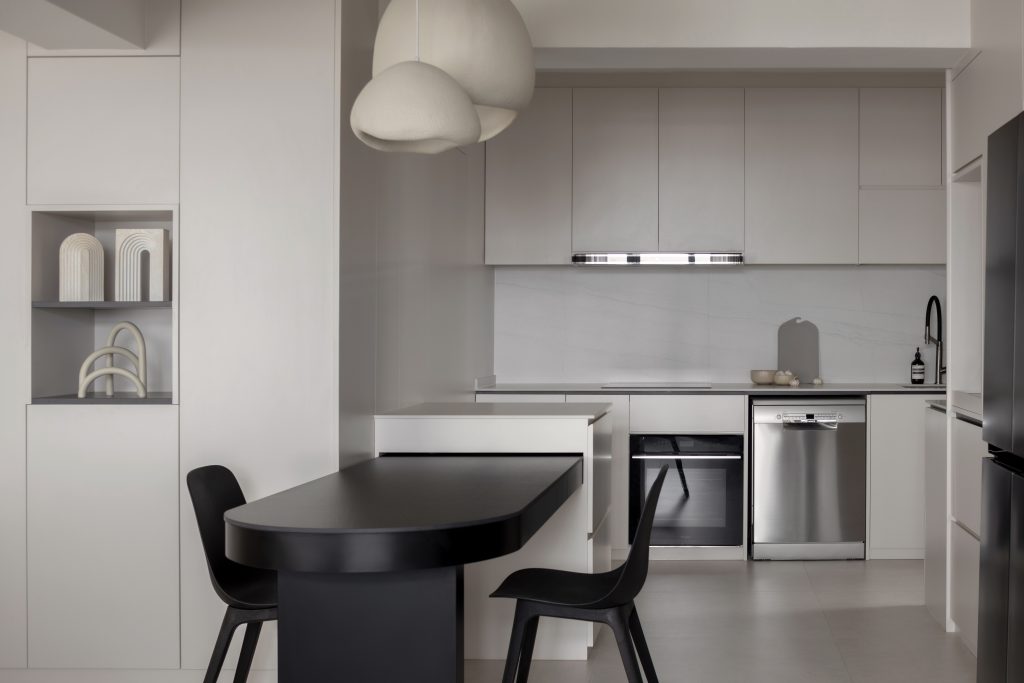
Slab and slim shaker doors age well because they do not compete with the living room. Matte fronts, subtle backsplash shine, and concealed pantry walls reduce visual noise.
Integrated appliances and tall storage make the open plan feel calm. Coordinate cabinet colours with hallway storage or TV built-ins for a cohesive look.
Maintaining and Cleaning an Open Concept Kitchen
Maintenance matters more in open concept kitchens because every mess is on display. Think of the kitchen, dining, and living zones as one shared environment.
Daily and Weekly Cleaning Routines
Daily: wipe the island and cooktop, sweep the shared floor, load the dishwasher, and clear the dining table before bed. Weekly: clean the backsplash, cabinet fronts, hood filters, and mop the full open space.
Assign simple responsibilities so one person does not carry the full reset.
Organisation Strategies for Open Concept Kitchens
Design storage around real habits: dishes near the dishwasher, spices near the hob, and kids’ snacks near the dining area. Use closed storage for messy items and curate open shelves carefully.
Create a landing zone for keys, mail, and bags so they do not end up on the island.
Decluttering the Wider Open Plan Space
Clutter in the living area affects how the kitchen feels. Use benches with hidden compartments, coffee tables with shelves, and cable management for routers and chargers.
Aim for mostly clear surfaces across the island, coffee table, and TV console.
Conclusion
Open concept kitchens can transform small and large homes by maximizing natural light, visual space, social interaction, and movement. The trade-offs are real: cooking odors, noise, lack of privacy, and clutter visibility.
If you want both openness and control, consider glass partitions, sliding doors, half walls, or wet/dry kitchen combinations. With thoughtful zoning, materials, ventilation, and storage solutions, an open concept kitchen can stay beautiful and functional for years.
FAQs
Upgrade to a powerful hood, open windows when possible, use lids for oily dishes, and consider a glass slider around the main cooking zone. Run the hood longer after cooking and clean filters often so suction stays strong. Fabrics near the kitchen, such as curtains and cushions, may need more frequent washing.
Yes, if planned carefully. Removing non-structural walls in a 30–50 m² apartment can increase natural light and make the space feel larger. Use a single-wall kitchen, movable island, fold-down dining surface, quiet appliances, and strong ventilation.
Costs vary by city, structure, and finishes. Removing walls, rerouting electrical, matching flooring, and upgrading lighting can add a clear renovation premium. Open concept kitchens may also cost more because every finish is visible from the living room.
Yes. Many homeowners create a serving hatch, internal window, peninsula, or partial wall opening instead of a full open concept. Always check load-bearing walls, gas lines, plumbing, and wiring with a structural engineer or qualified contractor before demolition.
They can be, because adults can supervise children in the living area while cooking. But easy access means children may reach hot surfaces, drawers, or island edges. Use induction cooktops, child locks, safety gates where needed, and keep sharp objects, chemicals, and breakables high or locked.