Key Takeaways
- Minimalism: Japandi interior design focuses on clean layouts, natural materials, and clutter-free living spaces.
- Functionality: The style is ideal for Singapore homes due to its smart storage solutions and efficient spatial planning.
- Warmth: Neutral tones, soft textures, and warm lighting create a calm and inviting atmosphere.
Japandi interior design is a blend of Japanese minimalism and Scandinavian, creating spaces that feel calm, balanced, and highly intentional. This design style has gained popularity in Singapore, where compact living is common. It makes homes feel spacious, uncluttered, and deeply livable while maintaining aesthetic warmth.
Origins of Japandi Design
Japandi design merges two distinct design philosophies: Japanese wabi-sabi and Scandinavian hygge. While wabi-sabi embraces imperfection and simplicity, hygge focuses on comfort and coziness.Both styles value craftsmanship, natural materials, and functionality, making their fusion a natural evolution into a modern, global interior trend.
Key Characteristics of Japandi Interior Design
Japandi interiors are defined by clean lines, muted color palettes, and a strong connection to nature. This style has matured into a dominant trend for modern homeowners in Singapore because it offers psychological and physical relief for urban living. Uncluttered spaces and purposeful, functional items are among the style’s core principles. Natural materials like wood, linen, bamboo, and ceramics dominate the aesthetic, and these natural textures bring warmth and natural beauty. Layouts prioritize openness, with open spaces and negative space helping maintain calm visual flow.
Japandi Interior Design in Singapore Homes
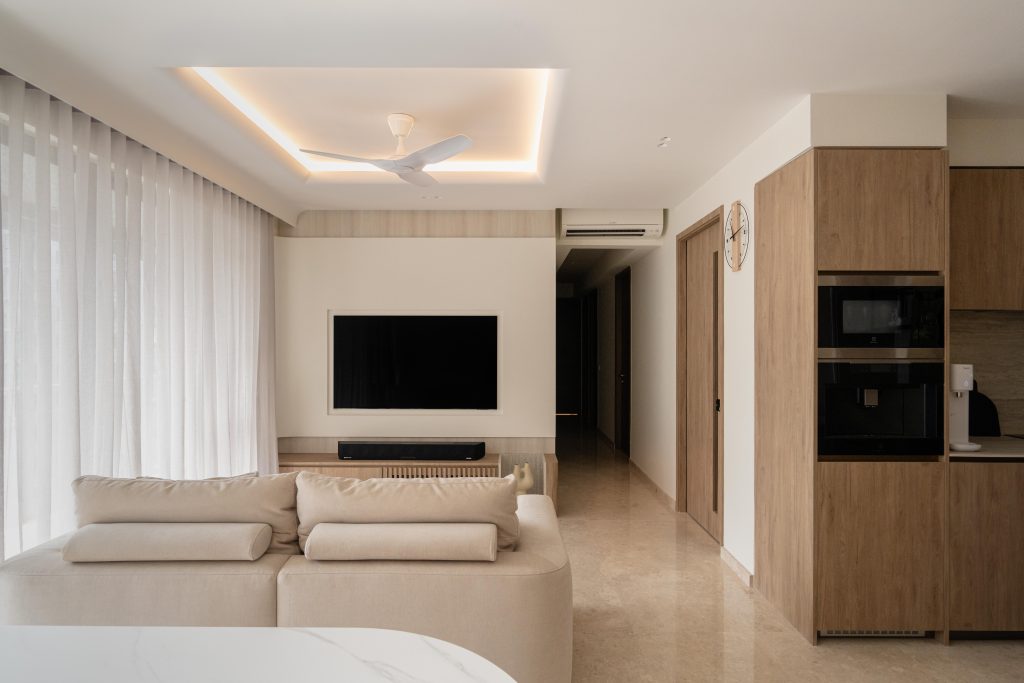
In Singapore, Japandi style has become a strong choice for compact HDB flats and condominiums where space efficiency is essential. The style helps maximize limited floor areas through smart layouts, built-in storage, and minimalist furnishing. It prioritizes quality over quantity, using open floor plans and built-in elements to improve natural light flow in urban flats and support calmer daily life. It also adapts well to tropical living by incorporating breathable materials and maximizing natural light and ventilation across the entire home. Common trends include flexible partitions and integrated kitchen profiles that keep the look clutter-free while supporting multi-use needs such as working from home. Some local renovations also replace non-structural walls with sliding glass panels or wooden shoji-inspired screens.
Japandi Living Room Design Ideas
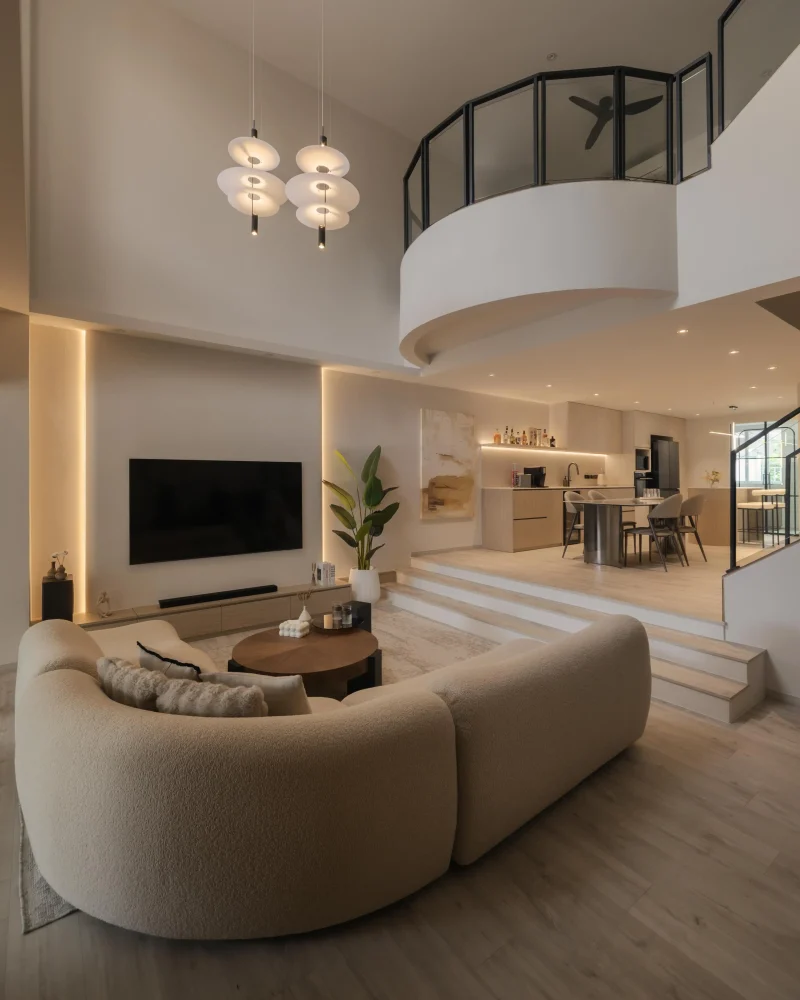
A Japandi living room focuses on simplicity and comfort. Low-profile sofas help introduce negative space and make ceilings feel higher, while wooden coffee tables and open layouts create a grounded yet airy feel. In tighter Singapore homes, curved silhouettes for coffee tables or accent pieces can improve flow and make pathways feel safer and more fluid. Decorative elements are minimal and intentional, often featuring neutral-toned cushions, ceramics, or indoor plants to add subtle warmth, so the room feels lived in rather than stark; a ceramic vase or bonsai trees can work as restrained accents.
Japandi Bedroom Design Concepts
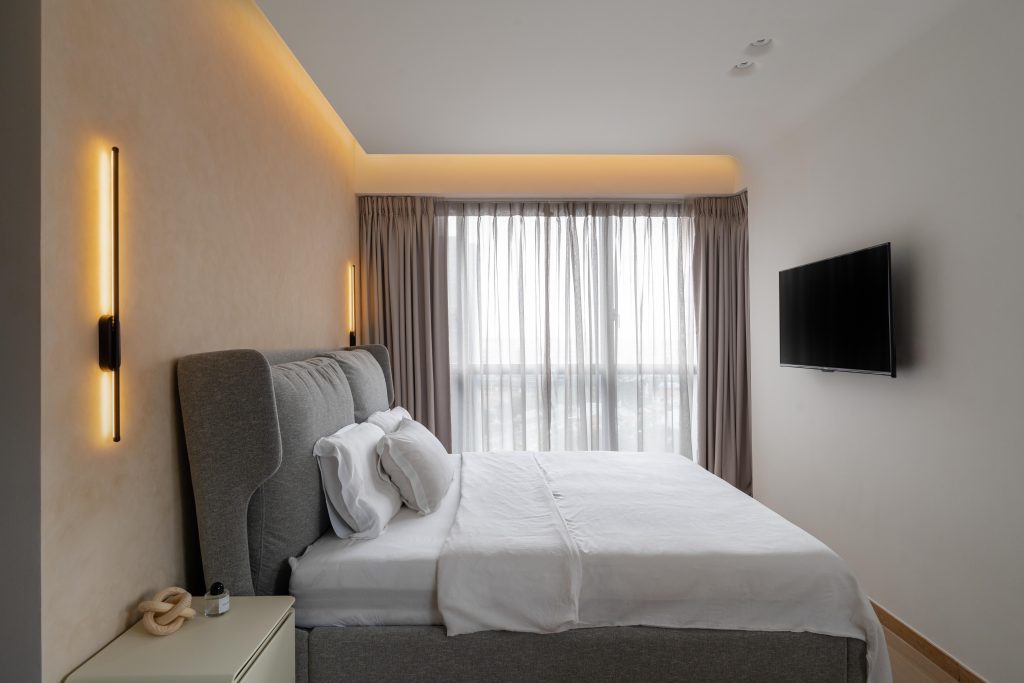
Japandi bedrooms are designed as restful sanctuaries, and platform beds are common because they preserve negative space. The emphasis is on uncluttered spaces, soft textures, and warm lighting with soft, diffused lighting for a restful mood. Natural fabrics such as cotton and linen are commonly used, while built-in storage helps keep surfaces clear and ensures a clean and peaceful environment free from visual distractions.
Japandi Kitchen and Dining Design
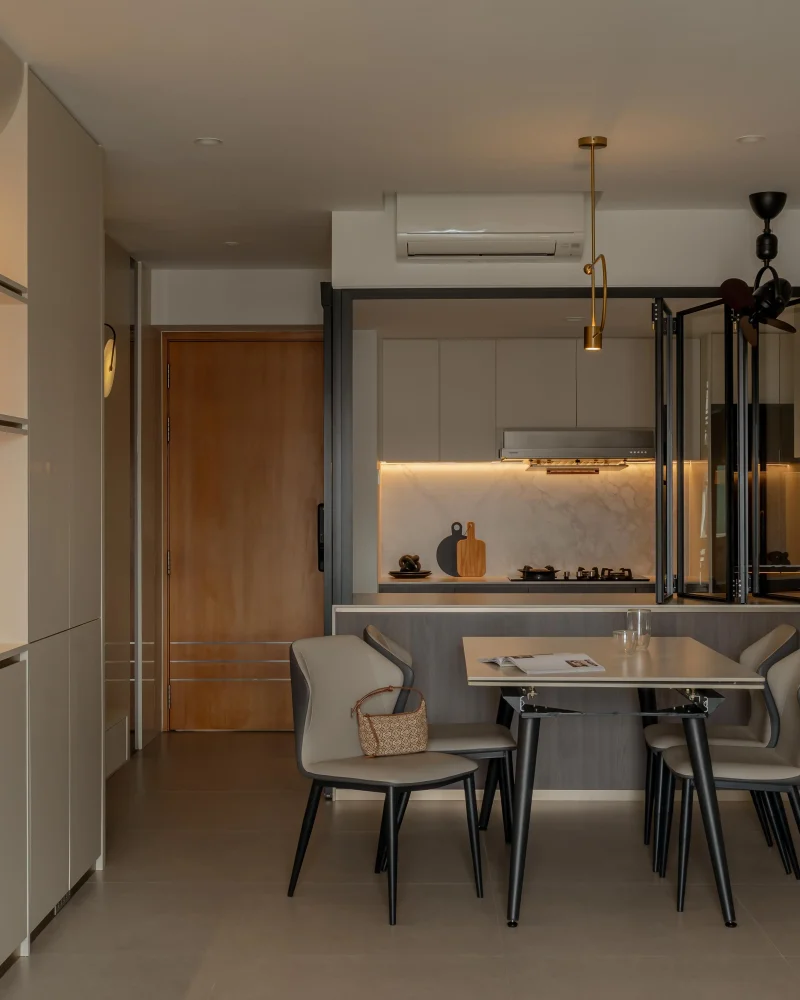
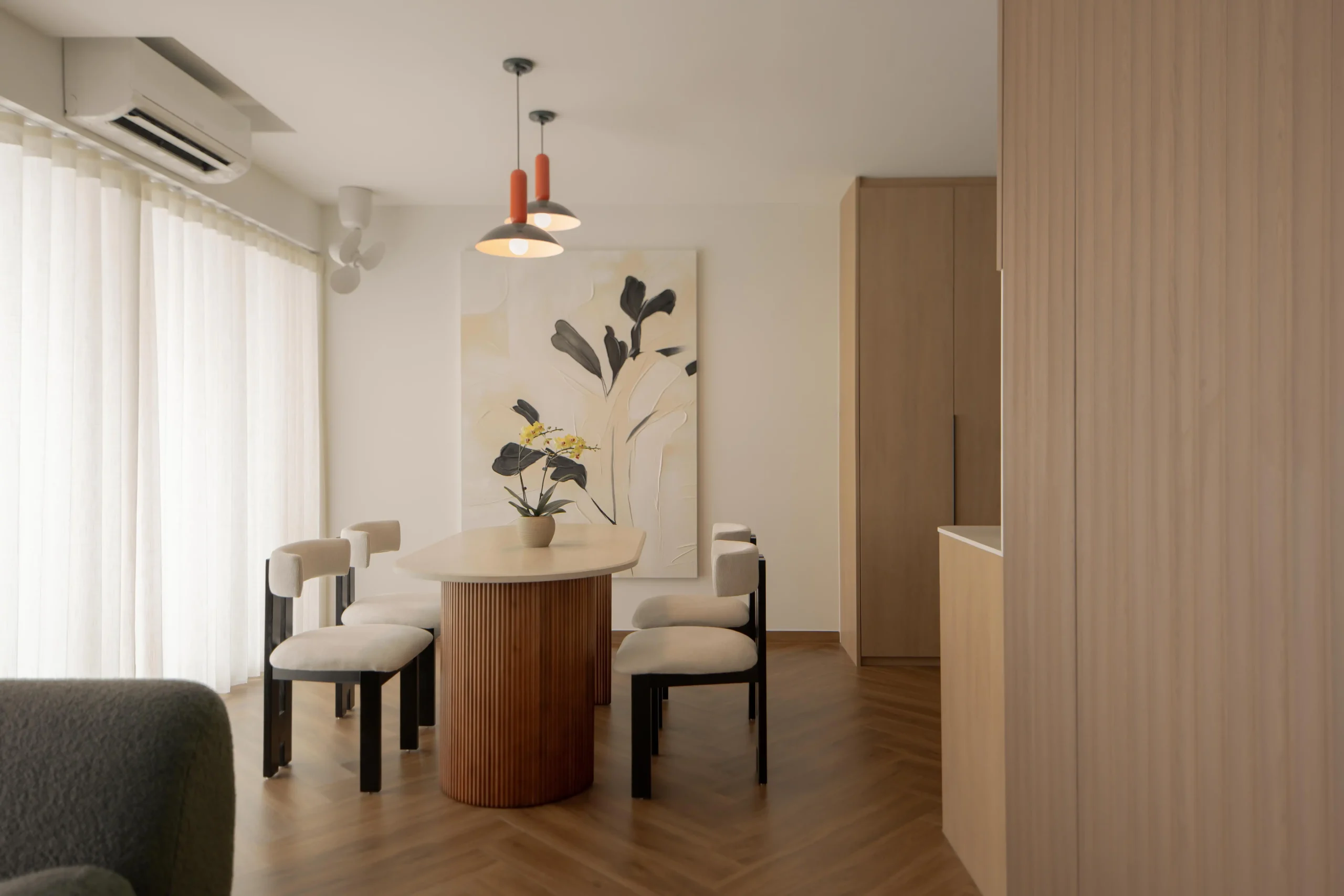
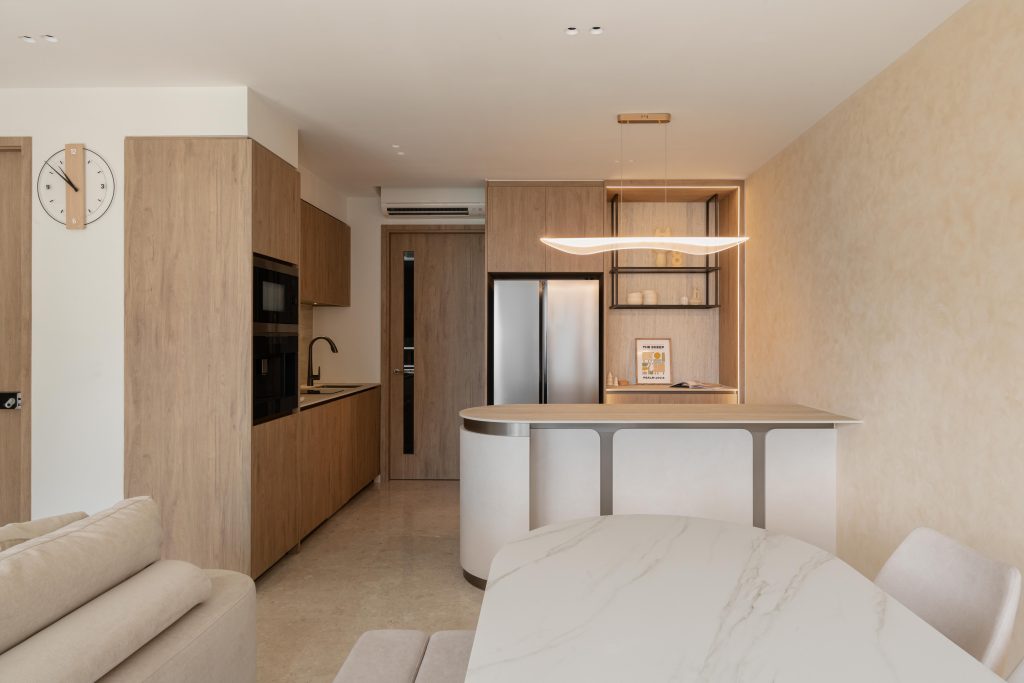
Japandi kitchens prioritize function and simplicity. Cabinetry often features matte finishes and concealed storage to maintain a seamless look, with seamless custom carpentry using flat-panel cabinets built floor-to-ceiling so they blend with the walls for a tidy visual appearance. This also allows for hidden storage, deep drawers, and a clear purpose for each kitchen or dining element. Wooden textures are commonly paired with stone countertops, while dining areas remain minimal, focusing on clean lines and practical layouts that support multi-use spaces, such as foldable dining tables, and encourage shared moments.
Materials and Color Palette Guide
The Japandi palette is rooted in nature, using neutral tones grounded in soft beige, oatmeal, stone grey, off white, and sand brown, complemented by warm wood tones like pale oak and walnut. Muted greens work well as a subtle, nature-inspired accent colour. Textures are kept natural and understated, with matte surfaces, woven fabrics, natural finishes, and rich textures adding depth without visual clutter, while textured wall finishes like limewash or microcement help prevent a flat look.
Furniture and Decor Principles
Japandi design is guided by a “less but better” design philosophy, so furniture and decor favour simple lines and intentional restraint. Furniture pieces are carefully selected for both form and function, and each one should be functional and serve a clear purpose, often featuring multi-purpose use. Decorative elements are minimal, typically handcrafted or organic in nature, ensuring each piece contributes meaningfully to the space. To complete the look, choose natural materials such as wood, bamboo, stone, linen, and ceramics, with accents like handmade ceramics.
Lighting in Japandi Interiors
Lighting plays a crucial role in Japandi interiors. Natural light is maximized wherever possible, with long, continuous flooring and soft window treatments helping diffuse harsh light, supported by warm, diffused artificial lighting. Paper lanterns, soft pendant lights, wall sconces, and concealed lighting strips provide diffused lighting that helps create depth while maintaining a calm and inviting atmosphere throughout the home.
Common Mistakes to Avoid
A common mistake in Japandi design is over-decorating with cluttered accessories, so keep surfaces clear to preserve the minimalist balance. Another is mixing too many design styles, which dilutes the aesthetic. Poor storage planning can lead to visual clutter, and without enough hidden storage the Japandi look can quickly unravel. Additionally, overly cold tones may make the space feel uninviting rather than warm and serene.
Cost of Japandi Interior Design in Singapore
The cost of japandi interior design in Singapore varies depending on property type, materials, and customization level. HDB units typically require more space-efficient solutions, while condos and landed homes allow for more expansive interpretations. While budget-friendly options exist, high-quality Japandi design often involves investment in custom carpentry and natural materials.
Hiring a Japandi Interior Designer in Singapore
Choosing the right interior designer is key to achieving an authentic Japandi home. Look for firms with experience in minimalist and natural design styles, strong portfolios, and a clear understanding of spatial planning like Sumspace Studio. We understand japanese aesthetics and scandinavian warmth, not just minimalist styling. Customization is essential to ensure the design aligns with both lifestyle needs and aesthetic goals, with the approach applied consistently across the entire home where appropriate.
FAQs
Japandi is a hybrid design style combining Japanese minimalism and Scandinavian functionality, emphasizing simplicity, natural materials, and calm, balanced living spaces. It blends japanese design with scandinavian interiors into one calm, functional approach.
Yes, Japandi is highly suitable for small Singapore homes such as HDB flats and condos due to its focus on minimalism, efficient storage, and space optimization. More open layouts, including open floor plans, can help small apartments feel less cramped, while flexible partitions preserve an airy feel when full walls are not ideal.
Japandi interiors typically use neutral and earthy tones such as beige, white, soft grey, taupe, and natural wood shades to create a calm and cohesive atmosphere, with off white and stone grey often used as common base colours. Accents are usually kept restrained, and muted greens work well for adding a soft nature-inspired touch.
Japandi differs from Scandinavian design by incorporating Japanese minimalism, resulting in a warmer, more grounded, and more nature-focused aesthetic. Scandinavian style celebrates comfort, while Japandi brings in greater restraint from Japanese tradition.
Japandi design costs vary depending on materials, customization, and space size, ranging from budget-friendly minimalist setups to premium bespoke interior solutions.